
Microsoft Contemplates Adding AI to MS Paint
Microsoft Paint is the poster child of a time forgotten. It’s been a standard app on Microsoft PCs for even longer than you think—38 years, to be prec
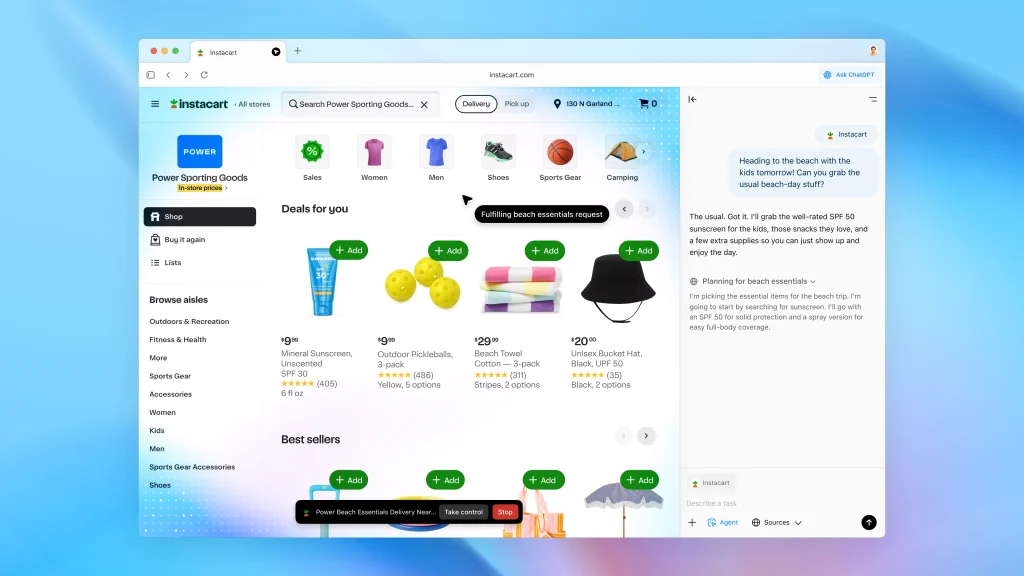
There’s a quiet revolution happening in the one piece of software you use every single day but rarely think about—the browser. Chrome, Safari, Firefox—they’ve been our windows to the web for decades. But now, something seismic is happening.
A new species of browser is emerging: the AI browser. And it’s not just changing how we browse—it’s redefining what it means to use the internet at all.
Once upon a time, browsers were dumb. They showed you what you asked for, nothing more. You typed, they fetched. But AI browsers—ChatGPT Atlas, Arc Search, Perplexity, Opera with Aria, and even Microsoft’s Edge Copilot—are evolving into thinking companions.
They don’t just load a webpage; they decide what you actually wanted from it. Search for “best hotels in Kyoto,” and instead of a Google results page, you get an instant summary, itinerary, map, and maybe even a recommended flight. You didn’t browse—you delegated.
This shift is massive. The traditional search-browse-click loop—the backbone of the internet economy—is crumbling. Why wade through 20 SEO-optimized listicles when your browser can distill the web into an answer? But that convenience hides a darker tradeoff.
AI browsers are the next logical step in the “enshittification” of the internet. When your browser summarizes pages for you, it’s no longer the web you’re seeing—it’s the browser’s interpretation of it. You’re not reading human expression; you’re reading machine compression.
That means the web as a creative ecosystem—where independent creators, designers, and journalists publish for a human audience—is quietly dying. AI browsers flatten nuance into “key points.” They steal traffic without attribution. They turn websites into fuel for their own intelligence, and users into passive consumers of algorithmic digest.
It’s not hyperbole to say that AI browsers could finish what social media started: the total collapse of independent publishing economics. If users stop visiting actual sites, how do creators survive?
AI browsers sell the fantasy of intimacy: “We know you. We’ll filter the web for you.” But personalization is a euphemism for manipulation. Your browser will know your habits, interests, biases, and emotional tone—then feed you information calibrated to keep you “satisfied.” That’s not browsing—it’s conditioning.
And once the browser becomes the mediator of truth, you no longer control what you see. The web ceases to be an open network and becomes a personalized hallucination—your own algorithmic bubble, curated by whatever model your browser vendor happens to use this quarter.
For web designers, this is an extinction-level event. What happens when your beautifully crafted website never gets seen—only summarized? When your microinteractions, motion design, and layout hierarchy are stripped down to bullet points by a large language model?
The browser was once our canvas. Now it’s becoming a black box.
Designers will need to shift from visual design to information design for machines. Metadata, structured data, and clarity of intent will matter more than color palettes or CSS animations. We’ll be designing for readability by AI, not just humans.
In a twisted way, this is the ultimate return to the origins of the web: clean, semantic information exchange. But it’s also the death of creativity as interface.
AI browsers threaten not just aesthetics, but economics. Google’s empire relies on you clicking results. If browsers like Arc or Perplexity intercept those clicks with AI summaries, the ad-based web implodes. No traffic, no revenue, no ecosystem.
And then what? The browsers themselves will charge subscriptions. The “web” will become tiered—basic access for free, intelligent browsing for those who pay.
We could see the rise of “AI paywalls,” where models trained on your data are used to gatekeep your own preferences back to you.
AI browsers don’t agree with each other. Ask the same question in Arc, Copilot, and Perplexity—you’ll get different “facts.”
Each browser is training on different data, applying different ranking heuristics, and enforcing different values. This means truth becomes proprietary. Your worldview will depend on which browser you use.
It’s the new tribalism of the digital age: Chrome users vs. Arc users vs. Perplexity users. Not based on brand loyalty, but on epistemology.
The browser is no longer a window—it’s a mirror. It doesn’t show you the world; it shows you a version of the world optimized for your attention. The question isn’t, “What can AI browsers do?” It’s, “What will they choose to hide?”
We’re witnessing the collapse of the human-web handshake. Once, we asked questions and discovered meaning. Now, we’re being answered before we even form the question.
And that should terrify us.

Microsoft Paint is the poster child of a time forgotten. It’s been a standard app on Microsoft PCs for even longer than you think—38 years, to be prec

Web design as we know it is barely recognizable when compared to the first websites that graced the internet in the mid-’90s. From the garish, blink-f
In a recent article, I stated that these were exciting times for Artificial Intelligence. I looked forward to seeing what new developments would bring
The web is drowning in beauty. Or at least, what passes for beauty these days — polished gradients, 8px border radii, hero sections that look like the

We all know the feeling: you’re in the middle of an interaction, your app is humming along beautifully, and then—bam!—you hit a wall.Maybe it’s becaus
Let’s get one uncomfortable truth out of the way: web design is no longer about aesthetics, usability, or even user experience. Those noble goals have
We are an information hub dedicated to delivering clear, trustworthy, and engaging content across a wide spectrum of topics — from innovation and trends to daily life, wellness, and global developments.
Our team is passionate about creating content that helps people stay curious, make informed decisions, and understand the world with greater clarity and context.
With a focus on quality, relevance, and accessibility, we aim to offer a meaningful experience for everyone seeking knowledge, ideas, and thoughtful perspectives.