
Amazon Releases Terrible AI Art for Fallout Movie—Chaos Ensues
Amazon’s Fallout movie has been in the works for a few years now. Die-hard fans have been eagerly awaiting an update ever since the first announcement
Let’s talk about the AI takeover—at least, the one happening in web design. Everywhere you look, personalization is being pushed as the holy grail of UX. AI promises to tailor experiences, predict user behavior, and serve content in a way that feels almost… human.
Or does it?
Because if we’re being honest, a lot of AI-driven personalization doesn’t feel human at all. It feels robotic, a little creepy, and sometimes downright annoying.
Sure, it’s cool when Netflix magically knows you’ll love that obscure sci-fi thriller from 1997. But when an online store bombards you with ads for the toaster you bought last week? That’s just dumb.
As a web designer, you already know the basics. AI-driven personalization isn’t just about slapping a chatbot on a homepage or tweaking color schemes based on user behavior. The real challenge is making AI work with your design, not against it. And that’s where things get messy.
At its best, AI-driven personalization creates an experience so seamless that users barely notice it’s happening. Think about Amazon. Their recommendation engine doesn’t just suggest random junk—it learns, refines, and serves up products that make actual sense based on a user’s behavior. Spotify and Netflix do it too, subtly adapting playlists and content queues without making it feel forced.
That’s the kind of personalization that works. It enhances the experience without getting in the way. It doesn’t break UX conventions or throw users into unfamiliar territory. It’s effortless, invisible, and—most importantly—it feels natural.
But when personalization is done badly, it turns the web into a dystopian nightmare.
Ever landed on a website that remembers way too much about you? One minute, you’re casually browsing, and the next, the site is aggressively recommending things you barely recall looking at. Instead of guiding users, bad AI-driven design creates a filter bubble, limiting choices instead of expanding them.
And that’s the real danger: personalization can either enhance discovery or completely kill it.
The moment personalization starts feeling intrusive, it backfires.
Picture this: you visit a news site a few times, reading a mix of political articles. The AI behind the site decides, “Ah, you must only want content that aligns with these past clicks!” Suddenly, every time you visit, you see the same type of stories, the same perspectives, and the same echo chamber reinforcing itself.
This is exactly what happens with over-personalized AI in web design. It assumes too much. It stops suggesting fresh content, stops surprising users, and turns the experience into a predictable, repetitive loop.
And predictability? That’s UX poison.
Users don’t always want a tailored experience. Sometimes they just want to explore, to discover, to stumble upon something unexpected. But when AI over-personalizes, it removes that possibility. Instead of helping, it limits.
So how do you keep AI-driven personalization from turning your site into an over-optimized mess?
First, don’t let AI control the entire experience. Keep core UI elements consistent. A website shouldn’t feel completely different just because a user visited a few times. Imagine if every time you opened Netflix, the homepage had a totally new layout based on what you watched last. That would be chaos. Instead, Netflix keeps the interface the same but tweaks content placement. That’s the balance you want—adaptive, but predictable.
Second, give users control over personalization. Instead of AI making all the decisions, let users opt into personalized recommendations. A simple “Show me more like this” button can make all the difference between helpful and intrusive. Let users choose how much AI-driven adaptation they want.
And third, don’t make AI creepy. We’ve all seen those websites that seem to know way too much about us. There’s a fine line between a website being smart and feeling like it’s watching your every move. If AI-generated messages start sounding like they’re tracking exact user behavior—”Hey, we noticed you hovered over this button for 5 seconds!”—you’ve gone too far.
The scary part? This is just the beginning. AI isn’t just going to recommend content or products. In the future, websites will dynamically change based on how you move your mouse, how fast you scroll, even what mood your face shows while looking at the screen.
It sounds amazing—and terrifying.
If done right, AI-driven personalization could create an internet where every user journey is uniquely optimized for engagement. If done wrong, it could lead to a soulless, hyper-personalized web that eliminates spontaneity and creativity.
As a designer, your job isn’t to just “implement AI.” It’s to design experiences that feel human, even when powered by machines. The goal isn’t just to personalize—it’s to create an experience that’s actually better because of it.
So, are we building a web that truly understands users—or just one that traps them in an endless loop of their past behavior? Let’s talk. Where do you stand on AI-driven personalization. Is it the future of UX, or are we automating our way into a design disaster?

Amazon’s Fallout movie has been in the works for a few years now. Die-hard fans have been eagerly awaiting an update ever since the first announcement

Microsoft Paint is the poster child of a time forgotten. It’s been a standard app on Microsoft PCs for even longer than you think—38 years, to be prec
Web design as we know it is barely recognizable when compared to the first websites that graced the internet in the mid-’90s. From the garish, blink-f
The digital landscape is evolving rapidly. With the advent of AI, every sector is witnessing a revolution, including web design.As a web designer, sta
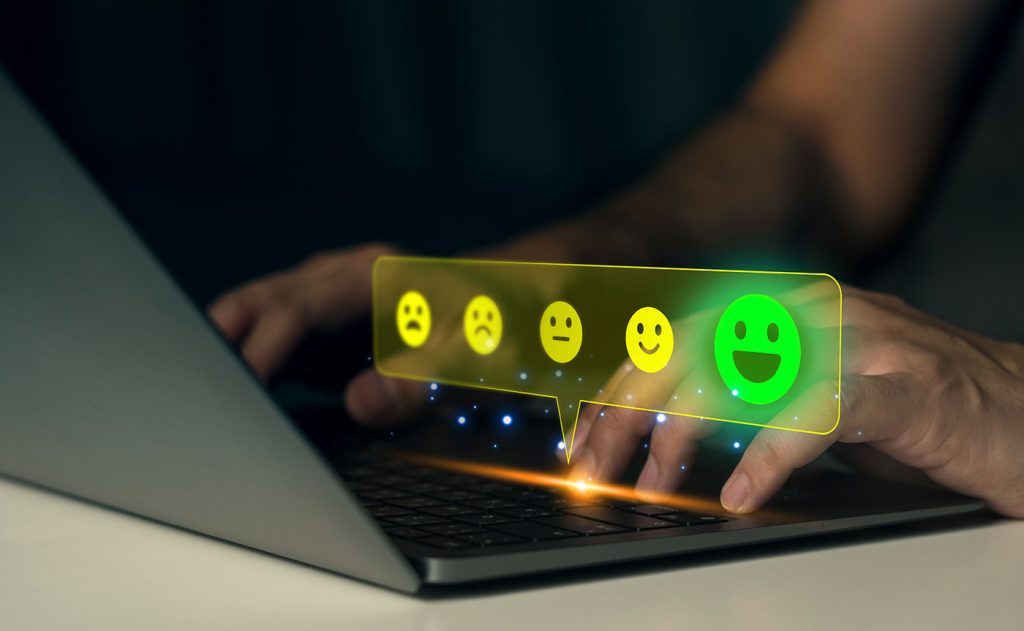
Let’s talk about the ancient art of the thumbs-up and thumbs-down — once the sacred, clumsy handshake between user and algorithm.In the early days of

Let’s start with a gentle truth: web design in 2025 no longer means what it used to. And that’s okay.Once, it meant Photoshop mockups and pixel-perfec
We are an information hub dedicated to delivering clear, trustworthy, and engaging content across a wide spectrum of topics — from innovation and trends to daily life, wellness, and global developments.
Our team is passionate about creating content that helps people stay curious, make informed decisions, and understand the world with greater clarity and context.
With a focus on quality, relevance, and accessibility, we aim to offer a meaningful experience for everyone seeking knowledge, ideas, and thoughtful perspectives.